
Health and Safety Policy – House Clearance Highgate
This Health and Safety policy sets out the commitment and procedures of House Clearance Highgate to protect the health, safety and welfare of employees, contractors and members of the public during all house clearance, rubbish removal and waste management activities. It applies to all domestic clearance, estate clearance and related waste removal services delivered by the clearance team across our service area. The purpose of this document is to ensure consistent risk management and legal compliance when delivering a rubbish company service.
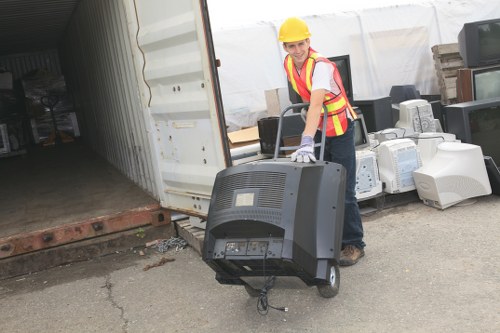 The policy covers work planning, site assessment, safe manual handling, control of hazardous substances and secure disposal. All operatives must follow the documented safe systems of work and report hazards promptly. This policy is supported by detailed operational procedures and training records which are maintained and reviewed regularly. The approach reflects good practice for a professional rubbish removal and junk removal provider.
Risk assessment is central to our safety approach. Before any house clearance visit, the clearance operatives will complete a site-specific assessment to identify trip and fall risks, structural hazards, sharps, asbestos risk indicators and the presence of excessive dust or biological contamination. The assessment determines required personal protective equipment (PPE), specialist handling equipment, and whether additional controls such as professional removal of hazardous items are necessary.
We emphasise prevention and mitigation: minimizing manual lifting, using mechanical aids, segregating waste streams and applying safe lifting techniques. All staff are instructed in correct posture, two-person lifts, and the use of trolleys and sack trucks to reduce musculoskeletal injuries. Supervisors conduct spot checks to ensure compliance with safe manual handling practices.
 Personal protective equipment is provided as required and includes gloves, safety boots, high-visibility clothing, eye protection and disposable masks where dust or biohazardous material is likely. Respiratory protection is used when appropriate for airborne contaminants. PPE use is mandatory and is monitored; damaged equipment is replaced immediately to maintain protection levels.
Control of hazardous materials is a priority. Operators are trained to identify potential hazardous items commonly encountered in domestic clearance, including chemical containers, batteries, fluorescent tubes, asbestos-containing materials and electronic waste. Where contaminants are suspected, work is halted and specialist removal arrangements are made. Our protocols ensure safe segregation and transport to licensed disposal or recycling facilities in line with waste duty of care obligations.
Emergency procedures are in place for incidents such as sharps injuries, chemical spills, fires and sudden illness. First aid provision is available on site or within rapid access distance, and staff are trained in basic first aid response. All incidents and near-misses are recorded, investigated and used to improve processes. This creates a learning culture within the rubbish company and supports continuous improvement.
Training and competency form the backbone of our safety management. Staff receive induction training, task-specific instruction, and refresher sessions on manual handling, PPE use, hazardous waste recognition and safe driving for work. Supervisors hold additional training in risk assessment and incident management. Competency assessments are recorded and reviewed to ensure that operatives remain qualified for the tasks allocated.
Contractors and sub-contractors engaged to support house clearance operations are required to demonstrate equivalent health and safety standards. Prior to engagement, subcontractors must provide evidence of training, insurance and method statements for the work to be undertaken. The primary duty holder retains oversight to ensure that all parties operate within the company safety framework and the wider regulatory requirements for rubbish removal services.
Responsibilities are clearly defined:
- Management – provide resources, maintain this policy, and ensure legal compliance and organizational oversight.
- Supervisors – conduct risk assessments, enforce safe systems of work, and report on performance.
- Operatives – follow procedures, use PPE, report hazards and participate in training.
 Equipment maintenance and vehicle safety are integral. All powered and manual equipment is subject to routine inspection, maintenance and testing by competent persons. Vehicles used for rubbish removal are loaded to safe limits and secured to prevent shifting. Drivers follow safe loading procedures and adhere to road safety and load restraint guidance when transporting waste between sites and disposal facilities.
 Monitoring and review ensure the policy remains effective and current. Performance is measured through regular audits, incident trend analysis and stakeholder feedback from operations staff. The Health and Safety policy is reviewed at least annually or whenever there are significant changes to the work activities, legislation or identified hazards. Continuous monitoring drives corrective actions and preventive measures that enhance overall safety performance.
This policy supports the company’s commitment to environmental responsibility and the safe management of waste streams. By combining robust risk assessment, clear responsibilities, training and ongoing review, the organisation aims to deliver a professional and safe house clearance service while reducing risk to people, property and the environment. The policy aligns with statutory obligations and industry good practice for a rubbish company operating within its service area.